
Steamed Rice vs Cooked Rice: What’s the Real Difference?
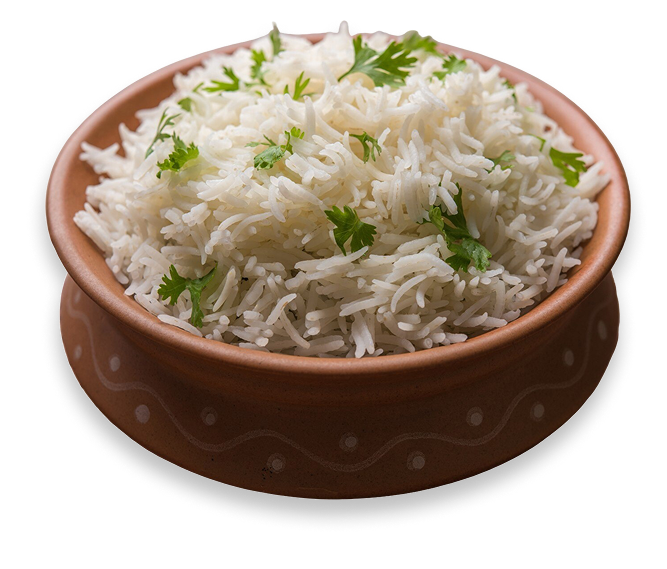
Table of Contents
“I eat rice almost every day, but honestly… I have never really thought about how it’s cooked.” If that sounds like a pain point, then you are alone.
We had so many conversations where someone said, “Isn’t all rice just… cooked?” And that is exactly where the confusion begins.
When people compare steamed rice vs cooked rice, they often assume it is just two different names for the same thing.
But the truth is, there are meaningful differences in method, texture, nutrition, digestion, and even how your body responds to
According to the FAO, more than 3.5 billion people rely on rice as a primary food source. Rice consumption has steadily increased over the last two decades, yet most people don’t clearly understand the difference.
So let’s break it down properly.
Understanding the Difference Between Cooked and Steamed Rice
Usually, all rice is cooked, and you cannot eat raw rice. But when people compare steamed rice vs cooked rice, they are usually referring to two different preparation methods:
- Cooked rice (boiled rice method): Rice is simmered in water until the water is absorbed or drained.
- Steamed rice: Rice is cooked using steam, often after soaking, without direct boiling in excess water
The difference lies in water exposure, heat control, and texture outcome
How Cooked Rice Is Prepared
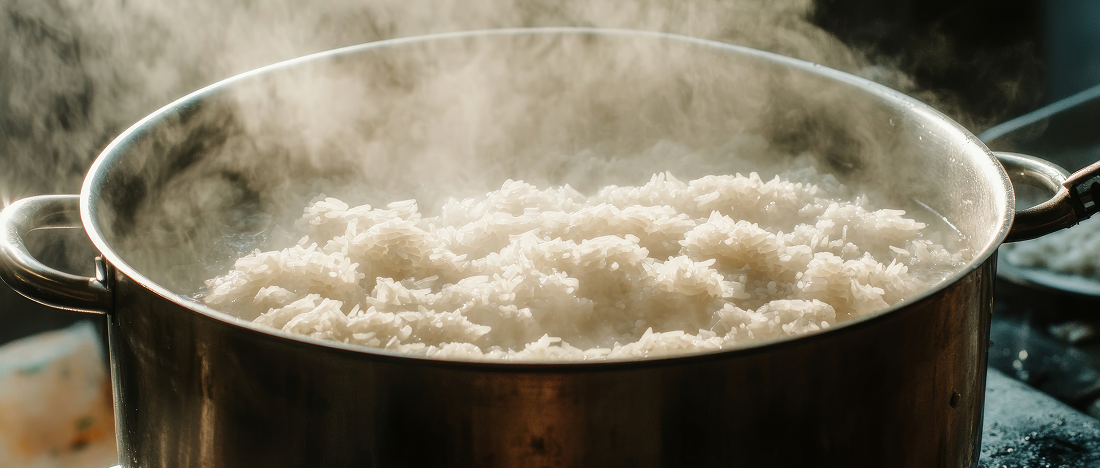
In a traditional boiling method, rice is placed in a pot with water, usually in a 1:2 ratio (1 cup rice to 2 cups water for white rice).
The rice absorbs the water as it simmers. Some methods allow the water to fully absorb and others involve draining excess water after boiling.
In households, this is the most common technique. It is simple, accessible, and does not require special equipment.
However, boiling rice directly in water creates more agitation. The grains move around, rub against each other, and sometimes break down.
That is why boiled rice can occasionally turn sticky or clumpy, especially if:
- The rice was not rinsed properly
- The water ratio was slightly off
- The heat was too high
- The rice was stirred too much
How Steamed Rice Is Prepared
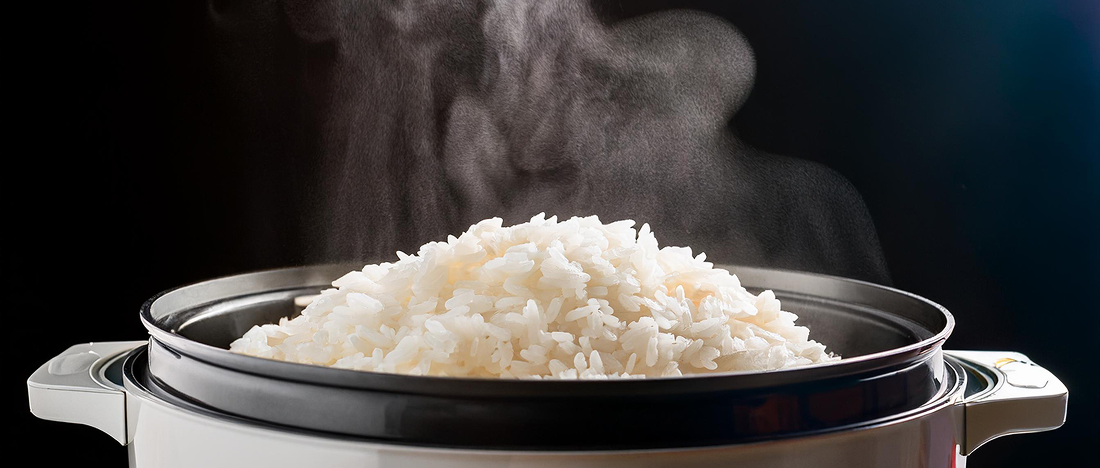
Steamed rice uses vaporized water to cook the grains more gently. In many Asian kitchens and restaurants, rice cookers rely heavily on steam circulation after the initial absorption phase.
Traditionally, steaming involves soaking rice first, then placing it in a perforated container or steamer basket above boiling water. The steam rises and cooks the rice evenly.
The result?Each grain remains separate. The texture feels lighter and fluffier and there is less surface starch disruption.
When you compare steamed rice vs cooked rice, the most noticeable difference is texture. Steamed rice is usually:
- Less sticky
- More defined in grain structure
- Slightly firmer
- Better at holding shape
Texture and Structure
We all know that rice contains starch made up of amylose and amylopectin. When rice cooks in water, the starch granules absorb liquid and swell.
In boiling methods, the constant movement in water causes more starch release on the surface. That is what creates stickiness. With steaming, the gentler cooking process reduces surface starch release. And that is why the grains remain more intact.
- If you are making sushi, for example, you actually want stickiness, so a boiling method (with proper rice type) works well.
- But if you are making stir-fry, biryani, or a grain bowl, steamed rice is often better because the grains don’t clump together.
This is one of the most practical differences to consider when discussing steamed rice vs cooked rice, the end use determines the better method
Nutritional Differences: Does It Really Matter?
1. Nutrient Retention
- Water-soluble vitamins like B vitamins may reduce.
- Some minerals may leach into the water.
- Since water is absorbed, fewer nutrients are discarded.
- Nutrient retention tends to be slightly better.
2. Glycemic Impact
- Firmer rice (like properly steamed rice) may digest slightly slower.
- Overcooked or mushy rice breaks down more quickly during digestion.
A 2019 review of rice preparation methods showed that cooking technique and cooling method influence the formation of resistant starch. Cooling steamed rice can slightly increase resistant starch, which may help moderate the blood sugar response.
So yes, in the debate of steamed rice vs cooked rice, cooking technique can affect digestion speed.
Moisture Content and Storage
Have you ever refrigerated rice only to find it dry and hard the next day?
Boiled rice often contains slightly more surface moisture, which can evaporate unevenly during storage. Steamed rice that is evenly hydrated tends to reheat more consistently. In meal prep situations, this matters.
If you are planning weekly meal prep, steamed rice may offer better reheating quality because the grains don’t clump as tightly.
Flavor Absorption and Cooking Versatility
Another difference between steamed rice vs cooked rice lies in flavor absorption.
Boiled rice that fully absorbs water can take on flavors if you cook it in broth instead of plain water. This works well for pilafs or seasoned rice dishes.
Steamed rice, on the other hand, is often cooked plain. It acts as a neutral base. That neutrality is intentional in many cuisines, it balances strongly flavored dishes like curries, stir-fries, or grilled meats.
If your goal is to build flavor directly into the grain, boiling may be preferable. If your goal is to complement other flavors, steaming might be better.
Cultural and Culinary Context
In many East Asian countries, rice is traditionally steamed rather than boiled and drained. Rice cookers dominate households for a reason, they create consistent steamed results.
In parts of South Asia, both methods exist depending on the dish. For biryani, rice is often partially boiled first and then steamed again in a layered cooking process.
That hybrid method ensures fluffy grains that don’t break apart. In Western kitchens, boiling remains common because it requires no special tools.
So when comparing steamed rice vs cooked rice, cultural tradition and equipment availability also influence preference.
Common Mistakes People Make
- Skip rinsing (which leaves excess starch)
- Use too much water
- Remove the lid too early
- Stir too frequently
Regardless of whether you steam or boil, controlling the water ratio and the heat are critical.
One cup of long-grain white rice generally needs about 1.5 to 2 cups of water when boiling. Steaming often requires soaking first, which changes how much water the grain absorbs during cooking.
Which Should You Choose?
The answer depends on your goal. If you want light, separate grains for stir-fry, grain bowls, or restaurant-style plating, steaming is usually the best option.
If you want soft rice for comfort dishes, casseroles, or recipes where texture blending matters, boiling is a good option
From a purely caloric standpoint, steamed rice vs cooked rice does not create dramatic differences. The bigger difference is all about its texture, moisture control, and nutrient retention method.
Conclusion
The real takeaway here is that rice is more technical than most people assume. The difference between mediocre rice and excellent rice often comes down to method.
Understanding steamed rice vs cooked rice gives you more control in the kitchen. You stop guessing and start choosing intentionally. If you are hosting guests and want visually appealing grains, go for steaming. If you are making comfort food for a cozy dinner, boiling may be perfectly fine.
Rice feeds more than half the world’s population. It deserves more attention than we usually give it.
At Keshar Kali, we understand that rice is the heart of the meal. That is why we focus on selecting premium-quality grains that perform perfectly whether you steam them for a perfectly separated texture or boil them for comforting softness.